Centrifugal Casting

Centrifugal casting is a specialised manufacturing process used to produce high-performance hollow bar and pipe with exceptional structural integrity, metallurgical consistency and mechanical strength.

At VEEM, centrifugal casting underpins the Forever Pipe range and enables engineered solutions for extreme wear, heat and corrosion environments across mining, industrial and energy applications.

What is centrifugal casting?

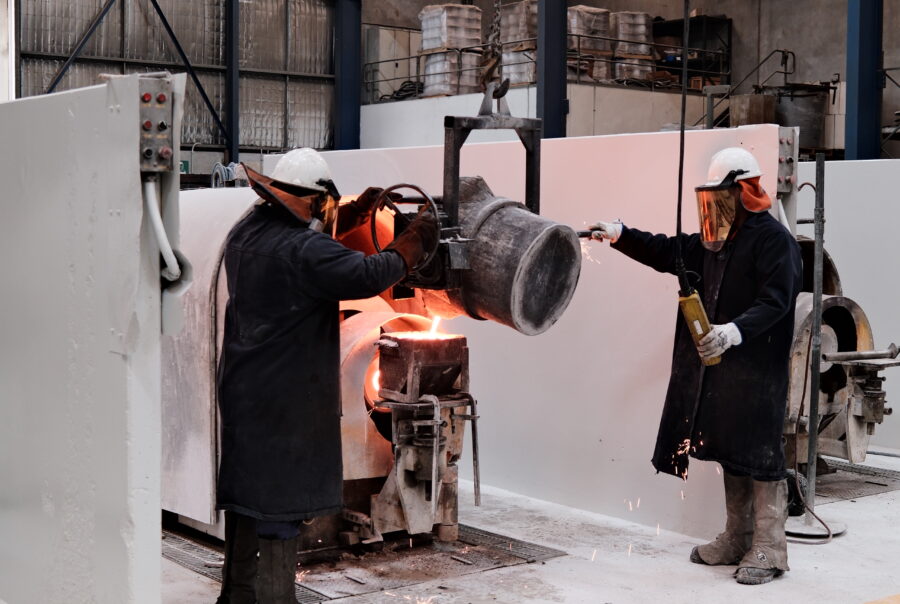
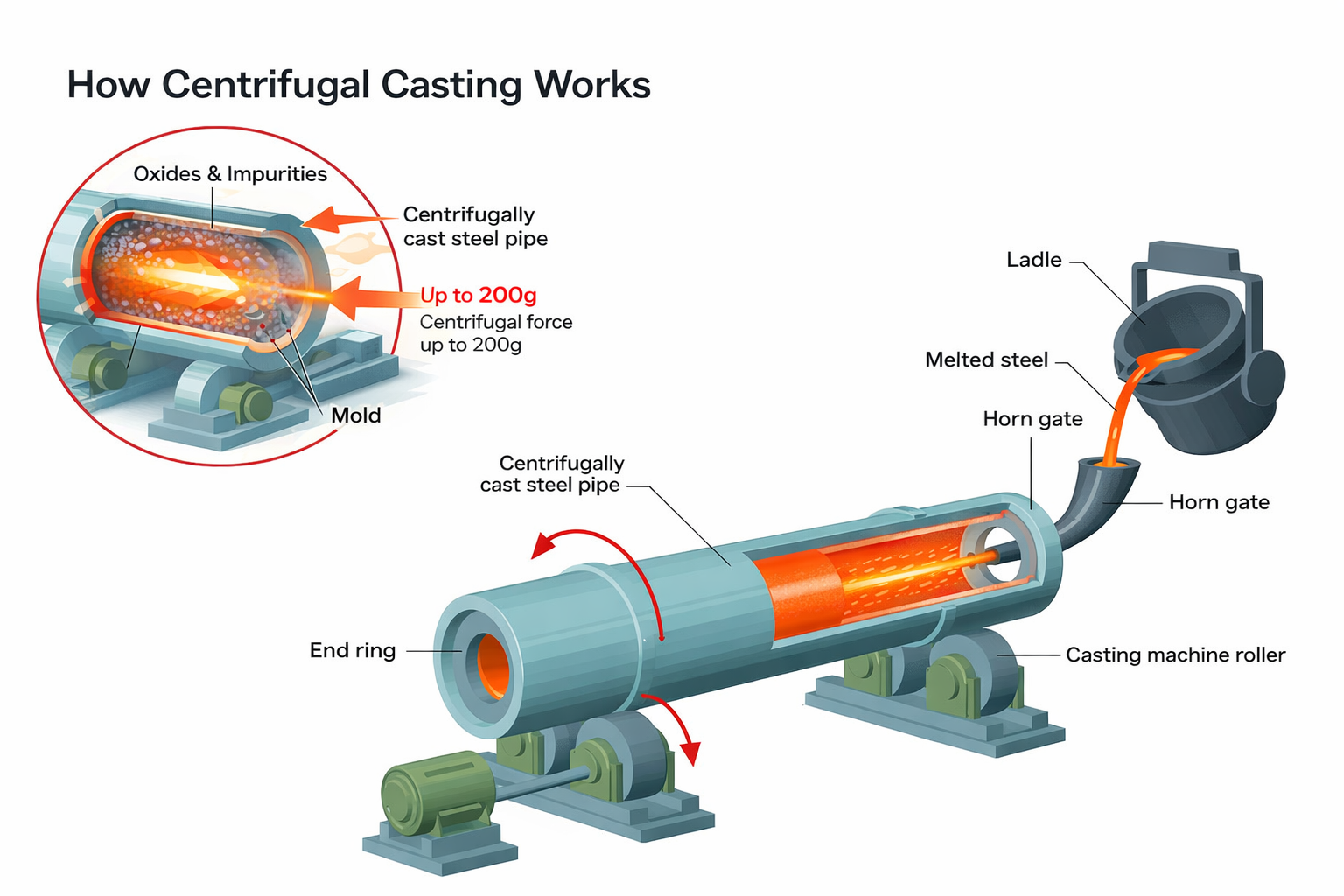
Centrifugal casting involves pouring molten metal into a rotating mould.
As the mould spins, centrifugal force distributes the molten metal evenly around the mould wall, forming a hollow cylindrical component.

This process produces a dense, close-grained material structure with significantly fewer defects than conventional casting methods.

Unlike gravity casting, centrifugal casting solidifies from the outside diameter inward, resulting in superior metallurgical quality, consistency and reliability.

Mechanical properties such as tensile strength, creep resistance and fatigue performance can be up to 30% higher than those achieved through traditional casting methods.
Step-by-step process

  1. A cylindrical mould is rotated at high speed.

  2. Molten metal is poured into the rotating mould.

  3. Centrifugal force distributes the metal evenly along the mould wall.

  4. Heavier metal is forced outward while lighter oxides and impurities migrate inward.

  5. The casting solidifies from the outside inward.

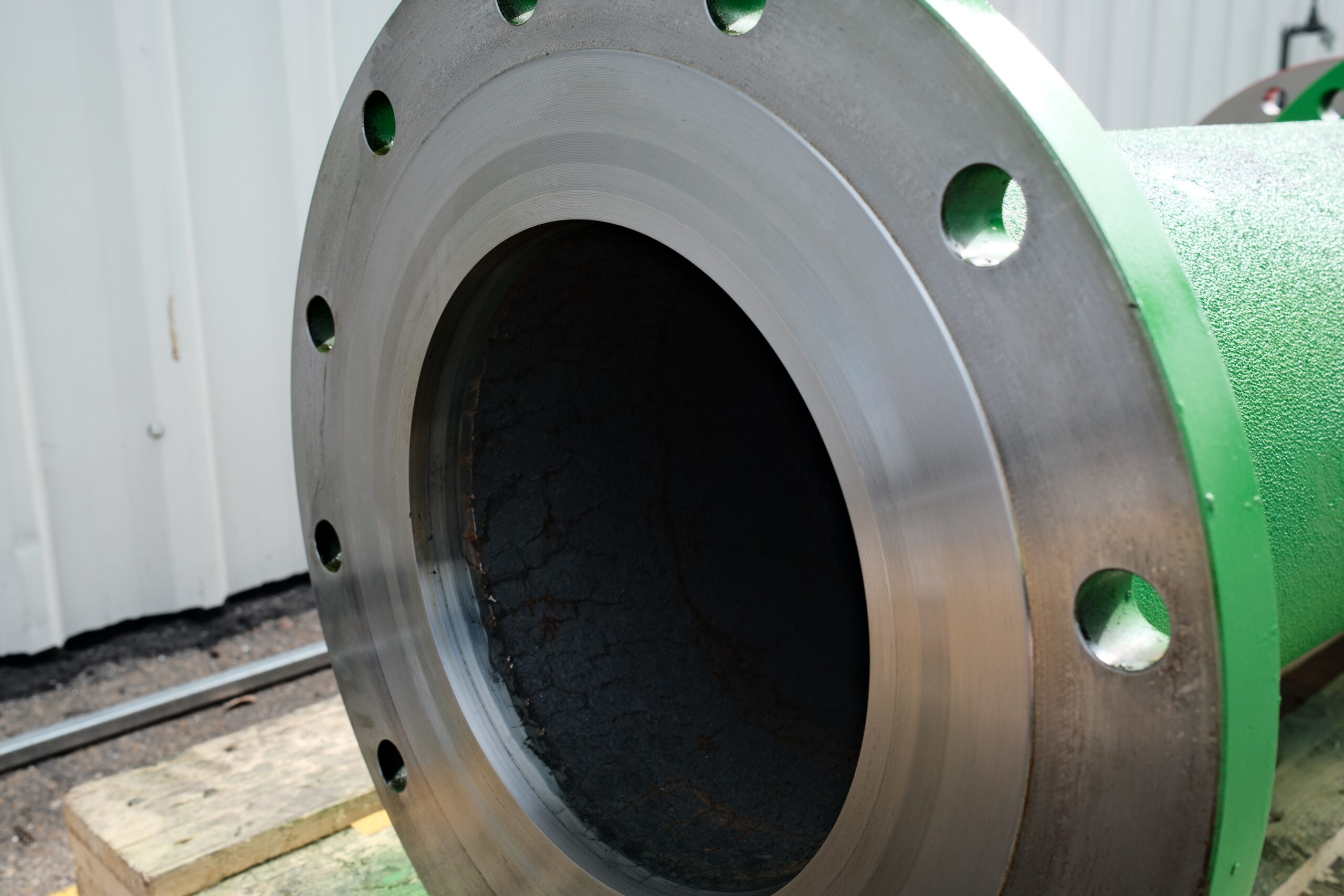
  6. The internal bore is machined to remove impurities and achieve precise dimensions.

The result is a hollow bar or pipe with exceptional structural integrity and consistent metallurgical properties throughout its thickness.

Forever Pipe™ Duo-Bar – Beyond Standard Centrifugal Casting

Our Forever Pipe™ Duo Bar takes centrifugal casting that one step further by integrating two engineered alloy layers in a single casting process. These metallurgically bonded layers facilitate an inner hardness ranging from 350 HBW to 650 HBW without affecting the mechanical properties of the outer layer. This delivers wear resistance where it matters most and structural toughness where it is required to increase through life.

Read more about Forever Pipe Duo-Bar >

Centrifugal casting vs
conventional casting methods

Better structural integrity

Conventional gravity and sand castings often solidify from multiple directions, which can lead to internal shrinkage, porosity and inclusions.

Centrifugal castings solidify in a single direction from the outside inward, significantly reducing defect formation and improving structural consistency.

Improved metallurgical quality

Centrifugal casting enables precise control of alloy composition and layer placement within the casting wall.

This allows engineered material performance that cannot be achieved with single-alloy or fabricated components.

Longer lifecycle performance

Centrifugally cast components deliver:

  • longer service life in abrasive and corrosive environments
  • improved resistance to fatigue and thermal cycling
  • reduced maintenance and downtime
  • lower through-life cost compared to fabricated or coated alternatives

Centrifugal casting vs
alternative pipe methods

Welded pipe

Welded pipe solutions are manufactured from rolled steel plate with longitudinal or spiral weld seams. Material properties vary across the weld zone and heat-affected areas, which can create structural weaknesses under cyclic loading, impact or abrasive conditions. Centrifugal casting, by contrast, produces a seamless, integrally formed structure with uniform metallurgy and no weld seam, delivering superior structural integrity and reliability in high-wear applications.

Seamless pipe

Seamless pipe is produced from solid billets using extrusion or piercing processes, resulting in uniform material properties throughout the wall thickness. While suitable for pressure applications, seamless pipe offers limited ability to incorporate engineered wear-resistant layers. Centrifugal casting enables precise control of alloy distribution, including bi-metal and multi-alloy structures, allowing performance to be tailored to specific wear, corrosion and structural requirements.

Sand or gravity casting

Sand and gravity casting involve pouring molten metal into static moulds, where solidification occurs from multiple directions. This can increase the likelihood of defects such as porosity, shrinkage and inclusions, leading to less consistent metallurgical quality. Centrifugal casting solidifies from the outside inward under high rotational force, producing a dense, close-grained structure with significantly reduced defect rates and improved mechanical performance.

Weld overlay and hardfacing

Weld overlay systems apply wear-resistant material to the surface of fabricated pipe after manufacture. Bond integrity and layer thickness can vary depending on welding quality and process control, and the interface between materials may become a failure point under thermal or mechanical stress. Centrifugal casting integrates wear-resistant alloys directly into the casting process, creating a metallurgically bonded layer with uniform thickness and superior durability in severe operating environments.

Typical applications

Centrifugally cast hollow bar and pipe are used in applications where structural integrity, wear resistance and metallurgical consistency are critical, particularly in abrasive, corrosive, high-temperature and high-load environments. Typical applications include slurry pipelines in mining and mineral processing, wear liners and sleeves, pump and valve components, furnace and refinery systems, industrial rollers and rings, shaft sleeves, hydraulic and mechanical components, and specialised infrastructure systems.

The ability to engineer alloy performance within the wall thickness makes centrifugal casting especially suited to demanding industrial environments where conventional fabricated, welded or coated solutions are insufficient.